
the low FODMAP Exit Plan
Eat more, fear less & support your gut microbiome
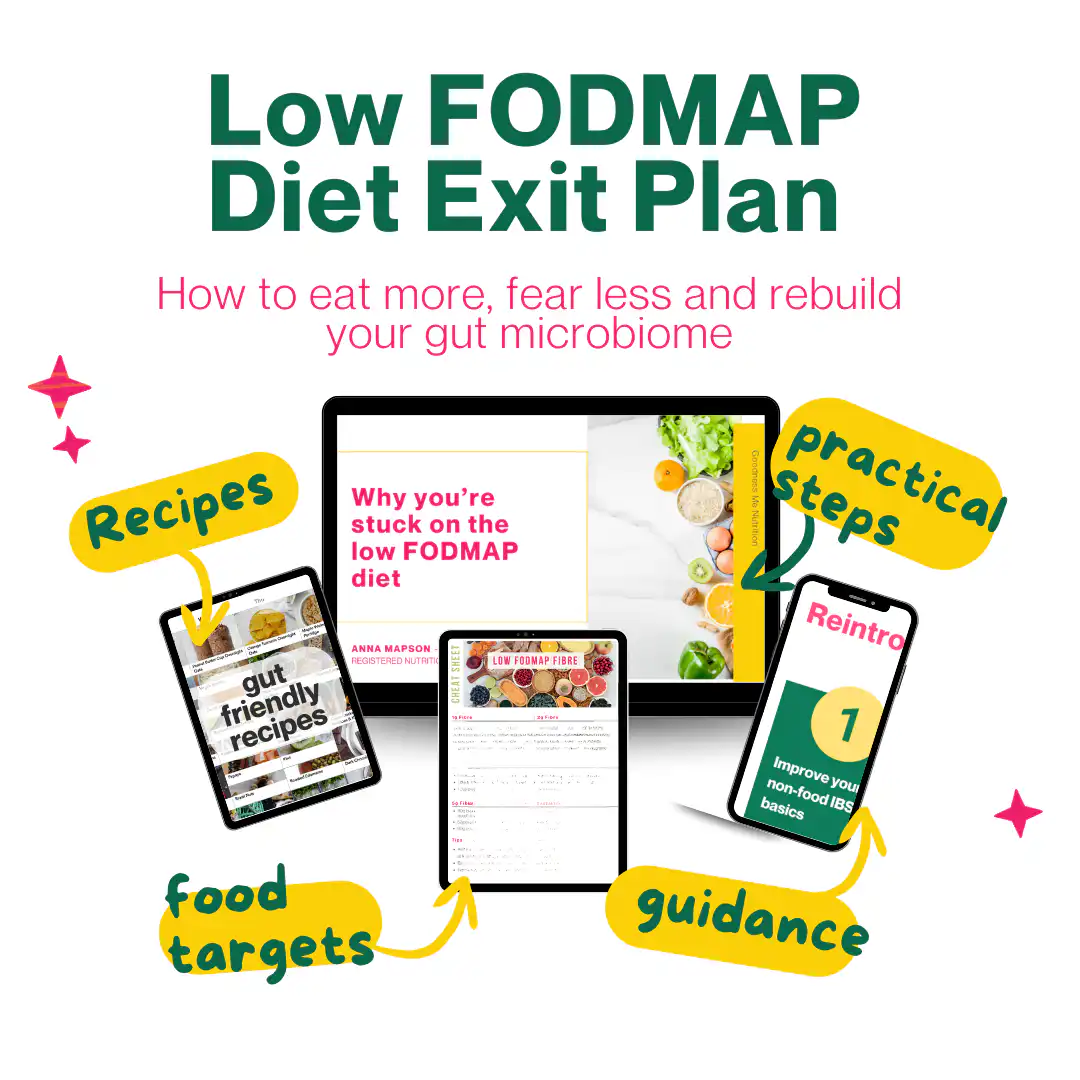
The low FODMAP diet is only meant to be followed for up to 6 weeks. But a lot of my clients have been stuck avoiding foods like onions, garlic, wheat and apples for years.
How to reintroduce foods to your diet - even if your digestion is still chaotic!
This course shows you the same step-by-step process I use in clinic to help people expand their diet, reintroduce foods with confidence and stop relying on long-term FODMAP restriction.
The first online course designed specifically to help people safely come off a long term low FODMAP diet and rebuild a varied diet after IBS.
If you’ve been avoiding a long list of foods and don’t know how to start reintroducing them, this course is for you. Even if your digestion still isn’t where you’d like it to be.
With this short actionable course you be able to:
- Build confidence in how to eat when you have IBS, and feel less confused about which foods to choose
- Test and challenge high FODMAP foods even if you haven’t eaten them for years
- Eat a wider selection of foods than you do now
- Discover how diet diversity and fibre interact with the gut microbiome
Why you shouldn't stay on the low FODMAP diet long term
After years of FODMAP elimination your gut needs some love.
Some people get huge improvements when they follow the low FODMAP diet, other people feel moderately better but stay low FODMAP ‘just in case’ lentils, yoghurt, mushrooms or cashews make things worse.
But whether or not your symptoms improve, if you are avoiding prebiotic fermentable fibres long term and missing out on diet diversity your gut microbiome can change.
It’s important to get off the low FODMAP diet in the long term – which is where this guide will be useful. But it’s not just a plan for FODMAP reintroduction. It also focusses on how to build up your gut microbe diversity. Gut microbes are an important part of digestion, so this can support the breakdown of more foods, including high fibre foods.
FODMAP reintroduction is more than just testing
Long periods of FODMAP restriction can reduce intake of some fermentable fibres and may affect the composition of the gut microbiome. In some people this can make you more likely to react to fibre (including many fruits, veg, nuts, pulses, wheat, etc). This is because the gut microbes have a role in helping digestion, so if certain gut bugs are low, then the cascade of fibre breakdown might be impaired.
Here’s what you’ll get and how it will help you:
Assessment toolkit – Know exactly where you’re getting stuck with FODMAP reintroductions (and any increase in fibre!) Stop guessing what to do next by getting clear on your current starting position, next steps.




What happens if you stay on the low FODMAP diet for too long?
In the large intestine we have trillions of bacteria that help us digest our food, train up our immune system, and support our whole body health.
Restricting fermentable fibres for a long time (e.g. months) can reduce the abundance of some beneficial gut bacteria that rely on these fibres as a food source.
When you restrict fibre for a long time (such as the keto diet, low carb or carnivore) or you’ve avoided all prebiotic foods your gut might need some careful support.
Long-term restriction may make it harder to increase fibre intake again, and some people find they continue to react when they try to eat a wider variety of foods.


Who is this course for?
 You've followed a low FODMAP diet for more than 6 weeks
You're scared to reintroduce foods You're still avoiding onion, garlic, wheat or apples years later You don't know where to start with reintroductions Your symptoms improved but you're worried they'll come back Your symptoms never fully improved but you're still eating low FODMAP
You've followed a low FODMAP diet for more than 6 weeks
You're scared to reintroduce foods You're still avoiding onion, garlic, wheat or apples years later You don't know where to start with reintroductions Your symptoms improved but you're worried they'll come back Your symptoms never fully improved but you're still eating low FODMAPThis is NOT for you if:
✘ You've never tried the low FODMAP diet
✘ You're looking for a personalised nutrition consultation
Most FODMAP advice is to reintroduce when your symptoms reduce......
Many people who work with me never reach a "perfect" symptom baseline. So they feel pretty confused about whether to reintroduce FODMAPs or not. This leaves them stuck eating low FODMAP for months or years.
In this course I'll show you how I help clients safely move forwards even when their digestion still isn't perfect.
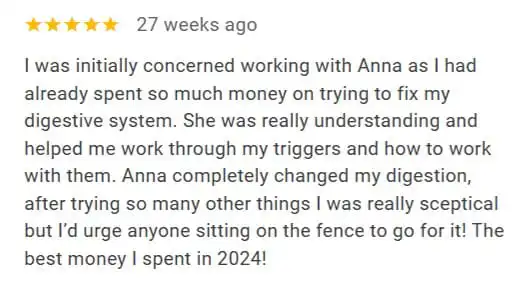
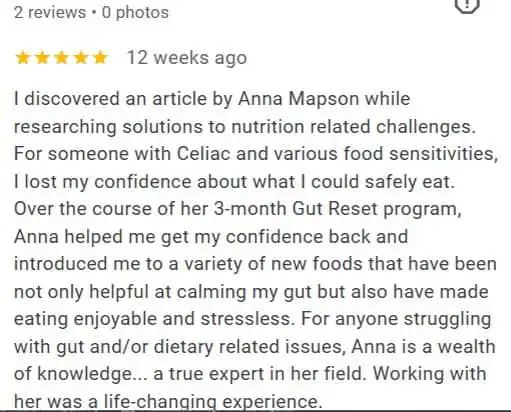
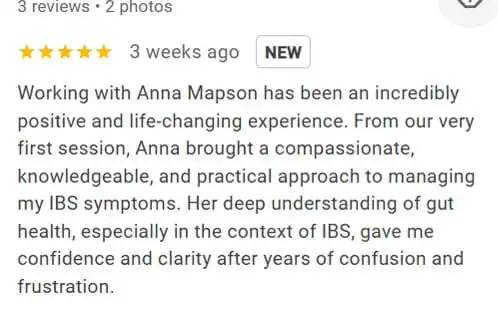
Cost of 'The Low FODMAP Exit Plan'
£39
You will have access to the materials for one year from purchase. If you have questions before you buy, email me on info@goodnessme-nutrition.com

Get your life back from IBS
Hi, I’m Anna, a registered Nutritional Therapist with over 10 years of clinical experience working with people who have IBS and SIBO.
I’ve been working with people individually to improve their digestion for years and have helped hundreds of people with gut health issues.
You need ‘The Low FODMAP Diet Exit Plan’ in your life if you want to:
- Start attending BBQs with the neighbours without freaking out about what to eat
- Go on holiday again without surviving off chips and bananas
- Stop scanning ingredients labels for onions and garlic
- Be able to grab a quick meal deal at work and actually have a choice of foods

What you get in
The Low FODMAP Diet Exit Plan:
This course gives you:


3 explainer videos giving you the exact steps to follow (total 60 mins content)
PLUS – you’ll also get these handouts:
- IBS Diet and Symptom tracker – to understand your baseline, and identify lifestyle patterns that can impact digestion.
- Foods by FODMAP – showing you which foods are in which FODMAP category.
- FODMAP Reintroduction schedule – the exact amounts of foods to bring back and how
- Symptom monitoring report for FODMAP reintroductions
- High fibre low FODMAP checklist
FODMAP FAQs
Do I need to have a calm baseline before I can start reintroducing foods again?
No this course explains how you’ll start reintroducing high FODMAP foods even if you don’t feel 100% better. If you never got to a place of feeling low FODMAP keeps your digestion calm, you can still go through the reintroduction process.
Can you stay on the low FODMAP diet forever?
No. The low FODMAP diet is designed as a temporary elimination diet followed by structured food reintroduction. It’s a method of giving your gut a rest, and during reintroduction finding your tolerance to certain types of fibres.
What happens if you never reintroduce foods?
Long-term restriction can reduce food variety, make eating more stressful and reduce intake of important prebiotic fibres that feed beneficial gut bacteria.
Many of my clients have followed the low FODMAP diet for years, so if this is you too don’t worry, there is a way out of the diet restriction.
Why should I trust what you say about this?
I’ve worked with people who have IBS for over 10 years and this course includes things I say to my clients all the time to help with their digestion.
Not everyone will end up eating all high FODMAP foods at the end of this course, that would be unrealistic, but I know there will be some small steps you can take to improve your nutrient intake, your fibre variety or reduce fear of food.
How long should FODMAP food reintroduction take?
This is variable, but each FODMAP group should take around 4 days (allowing a day rest in between). This assumes every introduction goes smoothly which isn’t very realistic.
I’d say to get through all the reintroductions properly you need around 4-8 weeks. This course takes you through a longer term gut microbiome rebuilding plan as well, and this might take longer than 2 months, but you’ll work through this in your own time.
I've already tried reintroducing foods. Can this still help?
Yes. This course isn’t just telling your to eat foods that are high FODMAP. I will help explain that sometimes you are reacting to foods BECAUSE you have been low FODMAP for so long, and how to get out of that rut.
This course will also explain why each one could be a trigger, and how to address the FODMAP reintroduction phase.
What if I fail a FODMAP food challenge?
If you have a reaction to a certain food you’ll need time to allow your digestion to calm down before trying the next FODMAP group. This can make the whole process take longer, but it’s so worth it when you properly understand what your digestion needs.
The important thing is to understand HOW to bring the foods back in, and what you’re looking for when monitoring your symptoms. This will allow you to know when to push on with a challenge, and when to hold back.