

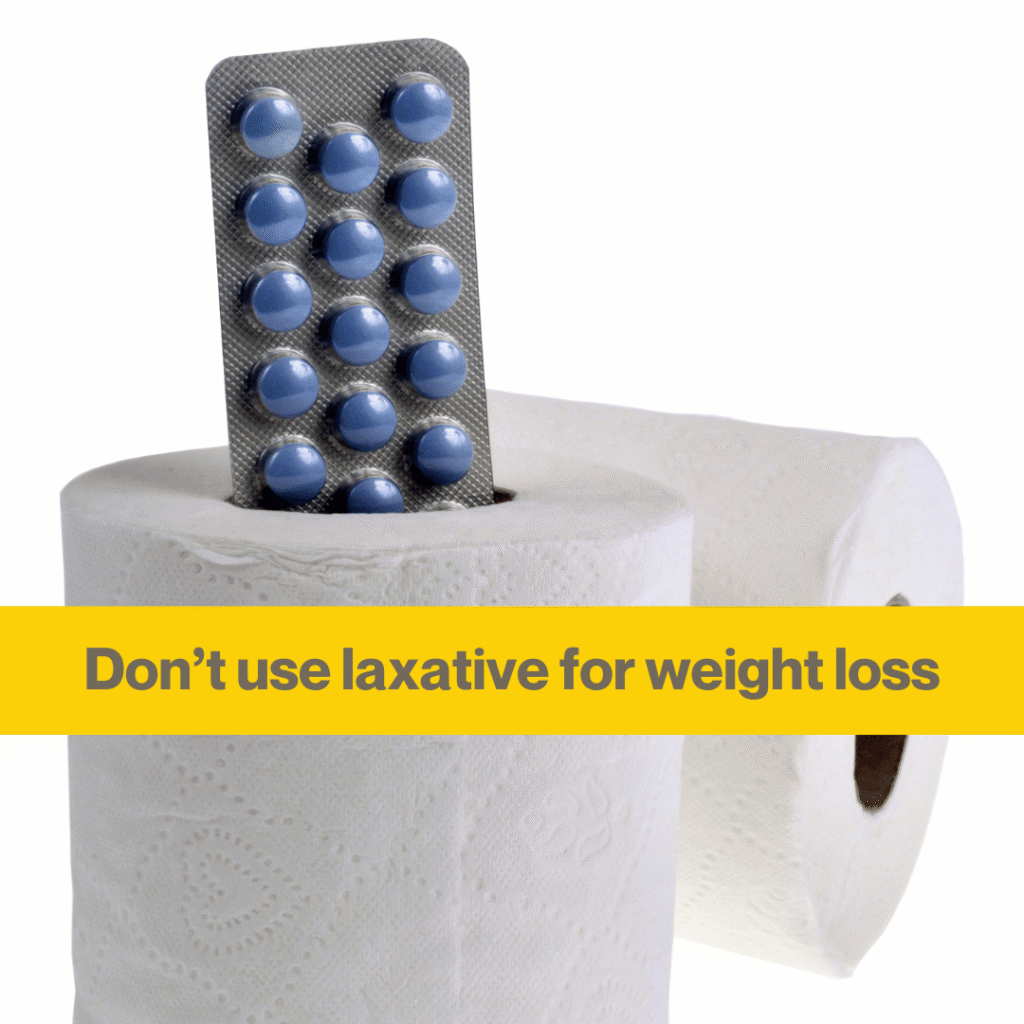
Gut health trends on Tiktok such as #guttok have been responsible for spreading myths such as laxatives help with weight loss. This is completely inaccurate, and may even harm your health.
As an IBS nutritionist I sometimes recommend people use laxatives for constipation, but there is no evidence they can support weight loss. And misusing them can be dangerous.
It’s a misconception that laxatives help with weight loss
The TikTok trend promoting laxatives for weight loss has gained traction, primarily because people are suggesting it’s an easy and inexpensive way to lose weight quickly.
Some even claim it’s similar to the effects of prescription medications like Ozempic. However, this is so wrong, and here’s why:
1. Laxatives do not cause weight loss
Laxatives are intended to relieve constipation by promoting bowel movements. There are different types of laxatives that can be chosen dependent on the patient’s diets, age, digestive symptoms and other health conditions.
Miralax (the one most mentioned on TikTok) is Polyethyline glycine (PEG) which is an osmotic laxative. In the UK brands include Movicol, Macrogol 3350, and Moviprep.
These types of laxatives draw water into the bowel, helping to form a softer stool. You need to be well hydrated with this type of medication, to allow the water to be drawn into the intestines.
Other laxatives (like pysllium husk / ispaghula husk / Fibrogel) may provide more bulk to stimulate a bowel movement. A third type will stimulate the colon to contract (e.g. products containing senna).
Laxatives of any kind do not reduce or remove fat cells or reduce energy intake. There is no evidence that laxatives lead to fat loss.
When you start to poo
Any initial weight loss is due to water and waste elimination, not fat reduction. As soon as you rehydrate and replenish your body, the lost weight will return.
If you’ve been backed up with stool when you take a laxative your stomach may feel flatter when it’s empty. However, it will start to refill as soon as you eat. It’s normal to have food in your colon.

2. Health risks of laxative abuse
Using laxatives for weight loss can lead to a host of health problems, including electrolyte imbalances, dehydration, nutrient deficiencies, and damage to your digestive system.
It can also cause a dangerous cycle of dependency, as your body may become reliant on laxatives to have regular bowel movements.
When waste products make their way to our large intestine, our body gets to work reabsorbing electrolytes and fluids. It’s like a recycling project inside us, where our body tries to salvage as many nutrients as it can before saying goodbye to the stuff we don’t need. That’s what ends up in our poo.
If you skip this important step, it can really affect your health.
You could become dehydrated, lose too many electrolytes, and start feeling dizzy spells, low blood pressure, and feeling super tired.
Plus, you might ironically find it harder to get up and move around, which is something that can really help with managing your weight.
If you are very low on electrolytes long term you might get headaches, feel dizzy, have weak muscles, or even get heart palpitations. And if you keep this up for a long time, it could spell trouble for your gut, kidneys, and liver.
3. Short term results, longer term consequences
While you may see a temporary drop in the numbers on the scale if you’ve had a big bowel clear out, laxative use may lead to a negative changes in your gut microbiome which may affect your immune system.
Regular use (as in most days of the week) of laxatives is also associated with a higher risk of all-cause dementia, particularly in those who used multiple laxative types or osmotic laxative. This study from 2023 was on people in the UK aged 40–69 yrs.
But what about my chronic constipation?
If you’ve been prescribed laxatives for long term use, you should have regular check ups with your doctor to ensure you’re staying healthy.
In most cases if you’ve just bought laxatives from the chemist, and you’re still not seeing any results after a week it’s work speaking to your pharmacist, or making an appointment with the doctor.

Book a Free 30-minute Enquiry Call
Book a free 30 min discovery call to discuss working with me on your digestion.
A healthy approach to weight loss
Losing weight is a common goal for many people, but you need to approach it in a safe and sustainable way, and laxatives just don’t work.
- Balanced nutrition: Focus on a well-rounded diet rich in fruits, vegetables, lean proteins, and whole grains. A nutrition professional can help you create a personalized meal plan that supports your weight loss goals while nourishing your body.
- Regular movement: Incorporate regular exercise into your routine, as it helps boost metabolism, build muscle, and improve overall well-being. Aim for 30 minutes of movement a day, and try to find something you enjoy like dance, team games or home workouts.
- Work with a nutritionist: If you’re struggling with weight loss or digestive issues, consult a healthcare provider or nutritionist. They can help identify any underlying issues and provide evidence-based guidance for achieving your goals.
- Mindful eating: Practice mindful eating techniques to better understand your body’s hunger and fullness cues. This can help you make healthier choices and avoid overeating.
In the era of viral trends and quick fixes, it can be hard to stay with the ‘boring basics’ (as I often call them) like sleep, exercise, vegetables and drinking water, but honestly they are what works best!
Laxatives should never be used as a means to achieve weight loss. They come with risks and ultimately it won’t help you lose weight!
Instead, opt for a balanced and sustainable approach to weight management, one that supports both your physical and emotional well-being.

Hi, I’m Anna Mapson, registered nutritional therapist
I help people with IBS and SIBO get control of unpredictable gut symptoms to find long term relief from painful and embarrassing IBS without restrictive dieting.
I can help you to eat more, fear food less and build a healthy gut.
Find more about my 3 month 1:1 Gut Reset programme.






Comments