


Guest post by Alex Orfanidis (M.Ost. BA is a GOsC-registered osteopath and hypermobility specialist) – Hypermobility HQ
Like many people who are later diagnosed with Hypermobile Ehlers-Danlos Syndrome (hEDS) or Hypermobility Spectrum Disorder (HSD), IBS was one of the first diagnoses I received.
Unfortunately, like many patients, it was given to me seemingly without much thought, and certainly without any clinical investigations. To be fair, this was back in the early 2000s, but Irritable Bowel Syndrome (IBS) was always intended to be a diagnosis of exclusion, meaning it should only be given as a diagnosis once other conditions have been ruled out.
As someone who has a gastrointestinal disorder, joining the 84.3% of people with hEDS who do, I was thrilled when registered nutritional therapist Anna Mapson reached out to invite me on her podcast. We sat down to talk about the relationship between IBS and hypermobility, and why everyone with an hEDS or HSD diagnosis (or who is in the process of being assessed) must be aware of the prevalence of gastrointestinal issues.

Management for hypermobile patients can look very different compared to someone with IBS who isn’t hypermobile. We dive deep into these differences on the Inside Knowledge podcast episode 157 ‘Hypermobility Disorders and Digestion,’ but first, here are 3 things everyone should know about IBS and hypermobility:
1. Your gut is a tube of connective tissue from mouth to bottom
As I often like to tell patients, imagine yourself as a doughnut. The hole of the doughnut represents the tube that runs through you, which we call your gastrointestinal tract, whereas the cake part of the doughnut represents your body.
Healthy gastrointestinal function relies on a few things, including tissue that has a normal amount of stretch. As faecal matter moves through your gastrointestinal tract and takes up space, it is meant to stretch the wall of the intestines. This stretch triggers further movement through something called the peristaltic reflex, which helps to move food down the digestive tract at the right speed and in the right way.
Now, to be clear: not every person with hEDS or HSD has gastrointestinal issues. In fact, I regularly meet patients who report that they have no issues with their digestive system (which I am, to say the least, envious of!).
That being said, someone with hEDS or HSD is 2.5 times more likely to have an IBS diagnosis, and 84.9% of people diagnosed with hEDS or HSD have a diagnosed gastrointestinal disorder.
In summary: gut issues are incredibly common and affect the vast majority of people with hEDS or HSD.
2. Your gut is affected by your autonomic nervous system
The movement of food through your digestive tract is locally managed by its very own nervous system, often called the “second brain” or the enteric nervous system. However, this local system relies on constant, clear communication from the autonomic nervous system.
Think of the autonomic nervous system as the part that runs all of the background functions of your body, such as blood pressure, heart rate, sweating and which works together with the enteric nervous system to control digestion. .
Dysautonomia, which literally means dysfunction of this autonomic system, is very common in people with hEDS and HSD. Very common examples of this include Postural Orthostatic Tachycardia Syndrome (POTS) and orthostatic hypotension (OH), which causes a significant drop in blood pressure when standing.
Unsurprisingly, these conditions can also affect gastrointestinal function due to their impact on the autonomic nervous system. When autonomic signaling is out of sync, it disrupts communication with the enteric nervous system. For example, blood can pool in the lower body and abdomen rather than efficiently circulating to support digestion. This shift in blood distribution slows down motility, which often explains why patients experience post-meal fatigue, bloating, and discomfort.
Understanding these intersecting systems in someone with hEDS, HSD, and IBS is vital. Sometimes there are massive structural and neurological factors influencing a person’s gastrointestinal function beyond “just” standard IBS (which is already a complex issue in its own right!).
3. Gastrointestinal issues in patients with hEDS/HSD can go undiagnosed or misdiagnosed for years (or even decades)
At the time of writing this, it takes an average of about 20 years for a patient to receive a diagnosis of hEDS or HSD. This means that in the meantime, many patients end up receiving diagnoses which don’t seem to fully explain the true scope of their symptoms.
If you’re someone with IBS and you believe you may have hEDS, HSD, or another hypermobility-related connective tissue condition (quick note: there are MANY types of connective tissue conditions, although most of them are rare or ultra-rare) and you’re experiencing gastrointestinal issues, please keep learning about the intersection between hypermobility, dysautonomia, and digestive issues.
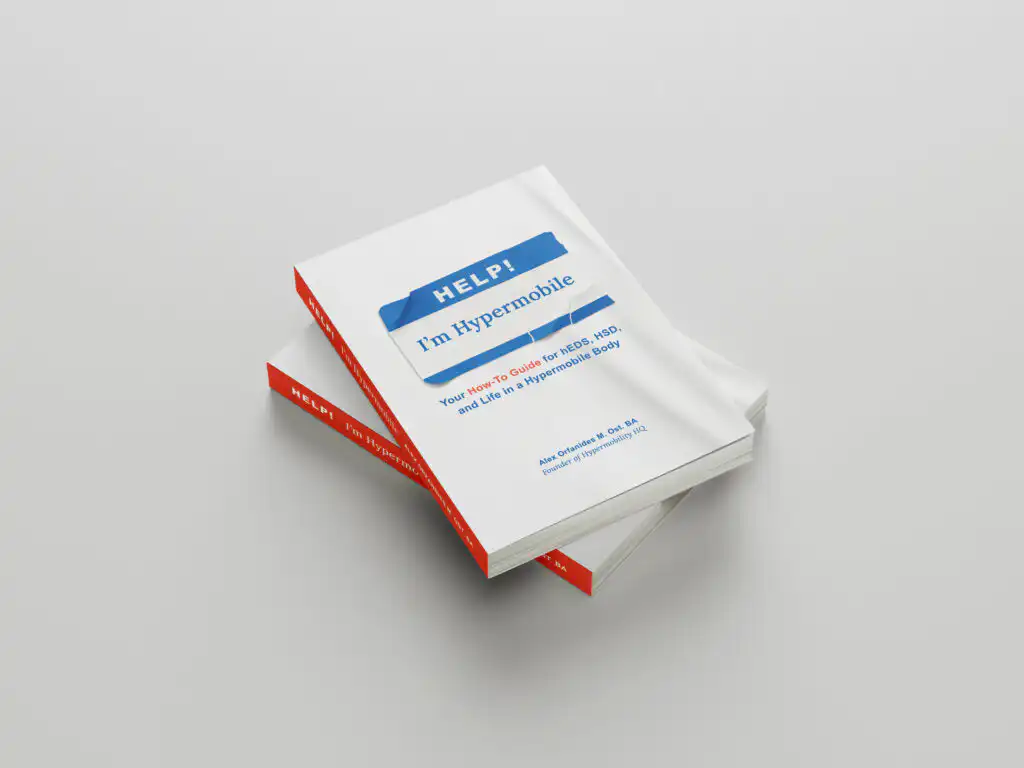
You can start by listening to my interview with Anna on her brilliant podcast, Inside Knowledge. I also discuss how hypermobile connective tissue can affect gut function in my book Help! I’m Hypermobile, which you can find over at helpimhypermobile.com.
Improving your gut health can be life-changing. As I see every day in clinic with patients who are referred for appropriate treatment and care, it can be absolutely critical to overall symptom management and quality of life. And understanding the relationship between hypermobility and gastrointestinal issues is often the first step to meaningful progress for patients with hEDS or HSD.
About the Author: Alex Orfanides is a registered osteopath who specialises in working with patients with hEDS and HSD. She is also the author of Help! I’m Hypermobile: Your How-to Guide for hEDS, HSD, and Life in a Hypermobile Body. Combining clinical expertise with lived experience, Alex helps patients navigate the complexities of hEDS and HSD. To explore practical tools for managing hypermobility or to learn more about the book, head over to helpimhypermobile.com.



Comments