

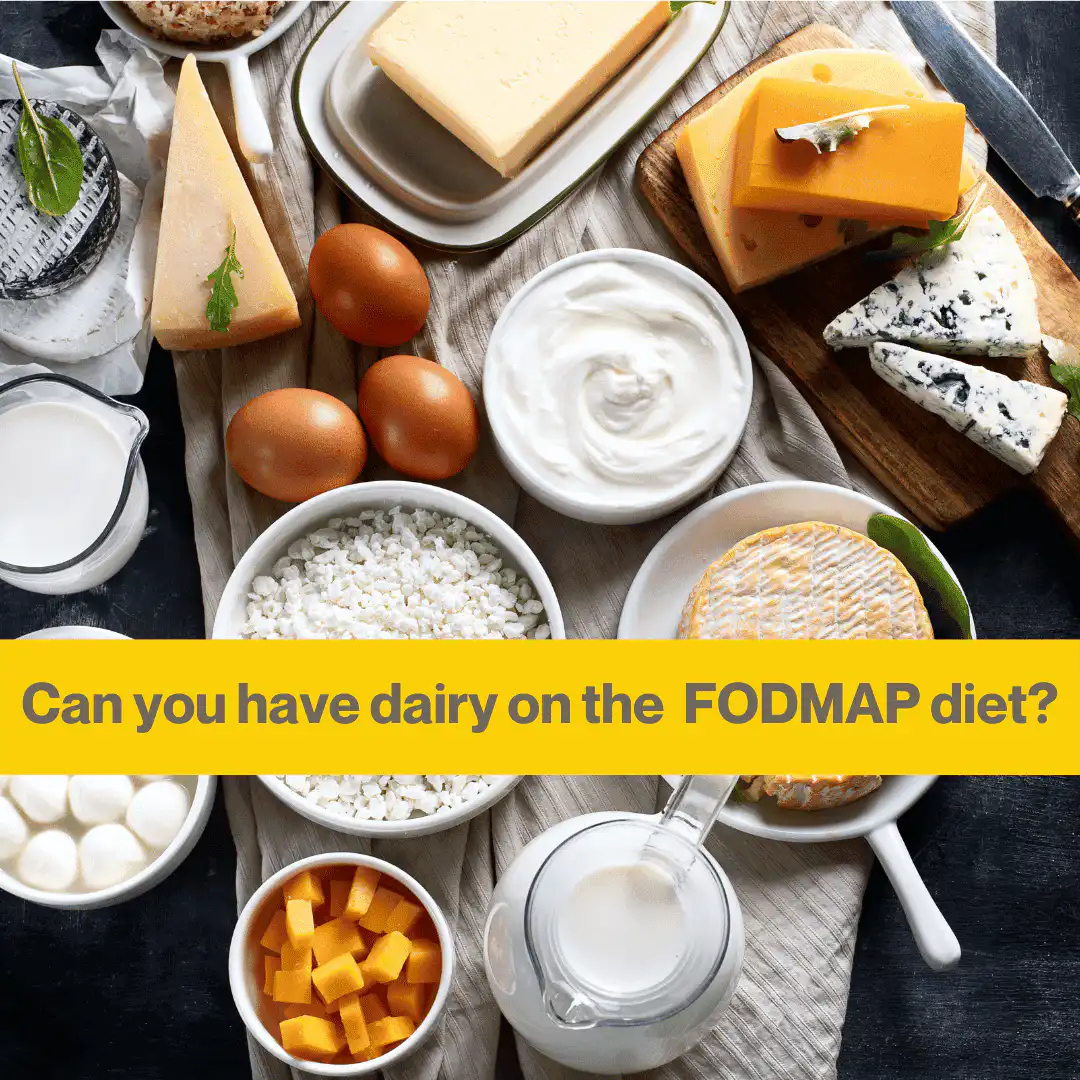
When following a Low-FODMAP Diet, it’s important to understand how dairy fits into the plan. In fact, some of my clients are surprised to know you don’t have to give all dairy up.
Dairy products contain lactose, which is a type of naturally occurring sugar that may trigger IBS symptoms in some people. In this article, I’ll discuss the role of dairy in a FODMAP diet and lactose-free options for those with IBS and sensitivities to lactose.
Understanding lactose and its role in dairy
Lactose is the naturally occurring sugar found in milk and many dairy products. When we consume dairy, our bodies produce an enzyme called lactase to break it down.
However, some people don’t produce enough lactase, leading to a condition called lactose intolerance. This can be fairly common in people with IBS. In the general population it’s found in somewhere between 2-5% of people.
Actually lactose intolerance can change over time, which means if you react to dairy foods now, you won’t necessarily react to them for ever.
Impact on digestion
In such cases, it remains undigested in the small intestine and travels to the large intestine where microbes work on the particles of sugar. This can cause IBS symptoms like bloating, gas, and diarrhoea.
A low-FODMAP Diet focuses on reducing the intake of specific types of carbohydrates, including lactose, to manage IBS symptoms.
How does dairy fit into a low-FODMAP diet?
When considering how dairy fits into a low-FODMAP Diet, firstly, you need to know that not all dairy products contain the same amount of lactose.
Some types of dairy, such as hard cheeses and lactose-free milk, are considered low-FODMAP. Whereas soft cheeses, milk, and yoghurt contain higher levels of lactose and would be considered high FODMAP.
During the first phase of the diet, when you’re restricting FODMAPs, you can still have small amounts of some dairy foods.
Testing for FODMAPs is part of the process – reintroduction is key
Being low lactose is only relevant whilst you’re in the restriction phase of the diet, but once you’ve reintroduced FODMAPs you might find you’re ok with lactose.
The amount of lactose allowed in a low-FODMAP diet depends on individual tolerance levels. Some people with IBS may tolerate small amounts of dairy foods, while others may need to eliminate it entirely.
Low-FODMAP dairy options
Here are some low-FODMAP dairy options to consider as part of a lactose-restricted diet:
Lactose-Free Milk
Lactose-free milk can make following a low-FODMAP diet much easier as there is one less new food to get used to. This has the lactose removed or broken down into simpler sugars, making it easier to digest.
You can also try dairy alternatives such as almond or soy milk. Ensure you choose a lactose-free or low-FODMAP certified option to minimise IBS symptoms.
Hard cheeses can fit in a low lactose diet
Hard cheeses, such as cheddar, Swiss, and Parmesan, have low lactose levels and are well-tolerated on a low-FODMAP Diet. These cheeses undergo an ageing process that reduces their lactose content, making them suitable for those with lactose intolerance. Read more about cheese and IBS – Can I eat cheese if I have IBS?

If you’ve been low FODMAP more than 6 months you need a new approach
Fear less, eat more and rebuild your gut microbiome.
Low-FODMAP yoghurt
When shopping for low-FODMAP yoghurt, look for lactose-free versions if you want to eat more than a spoonful per meal. Some yoghurts, such as Greek yoghurt, are strained, reducing the lactose.
However, carefully check the label to ensure the yoghurt does not contain high-FODMAP additives, such as sweeteners or fruit, which could trigger IBS symptoms.

Monitoring your lactose intake
Here are some tips to help you monitor your lactose consumption:
- Keep a food diary to note the dairy products you consume and any resulting symptoms. This can help you identify your individual lactose tolerance level. You can use my FREE diet and symptom tracker for IBS
- Read food labels carefully to check for hidden lactose in packaged foods if you’re really sensitive. Lactose can often be found in bread, cereal, salad dressings, and sauces.
- Seek guidance from a nutrition professional with experience in the low-FODMAP diet to ensure your nutritional needs are met.
Stay healthy whilst eating a dairy free diet
If you’re dairy free you’ll need to find ways to incorporate key nutrients such as calcium, iodine and omega 3 into your diet.
In summary
When considering how dairy fits into an IBS diet, remember that not all dairy products are equal in terms of lactose content.
Opt for lactose-free or low-lactose options, such as lactose-free milk, hard cheeses, and low-FODMAP yoghurt, to manage IBS symptoms. But not everyone with IBS will have an issue with lactose.
Monitoring your lactose intake and working closely with an IBS nutritionist can help you adapt your diet to suit your individual needs.
If you want help figuring out your IBS triggers, start your Gut Reset with me over 3 months to find a diet that works for you. Just set up a free call to discuss what you need some help with. Email info@goodnessme-nutrition.com

Hi, I’m Anna Mapson, registered nutritional therapist
I help people with IBS and SIBO get control of unpredictable gut symptoms to find long term relief from painful and embarrassing IBS without restrictive dieting.
I can help you to eat more, fear food less and build a healthy gut.
Find more about my 3 month 1:1 Gut Reset programme.


Comments