
If you’re eating very little and have lost weight, then been told your cholesterol is high, it’s probably not because you’re eating lots of fatty food. Most people with IBS or SIBO are very careful about high fat foods as these can trigger bloating, gas or diarrhoea.
So if not lots of high fat foods, why would your cholesterol rise?
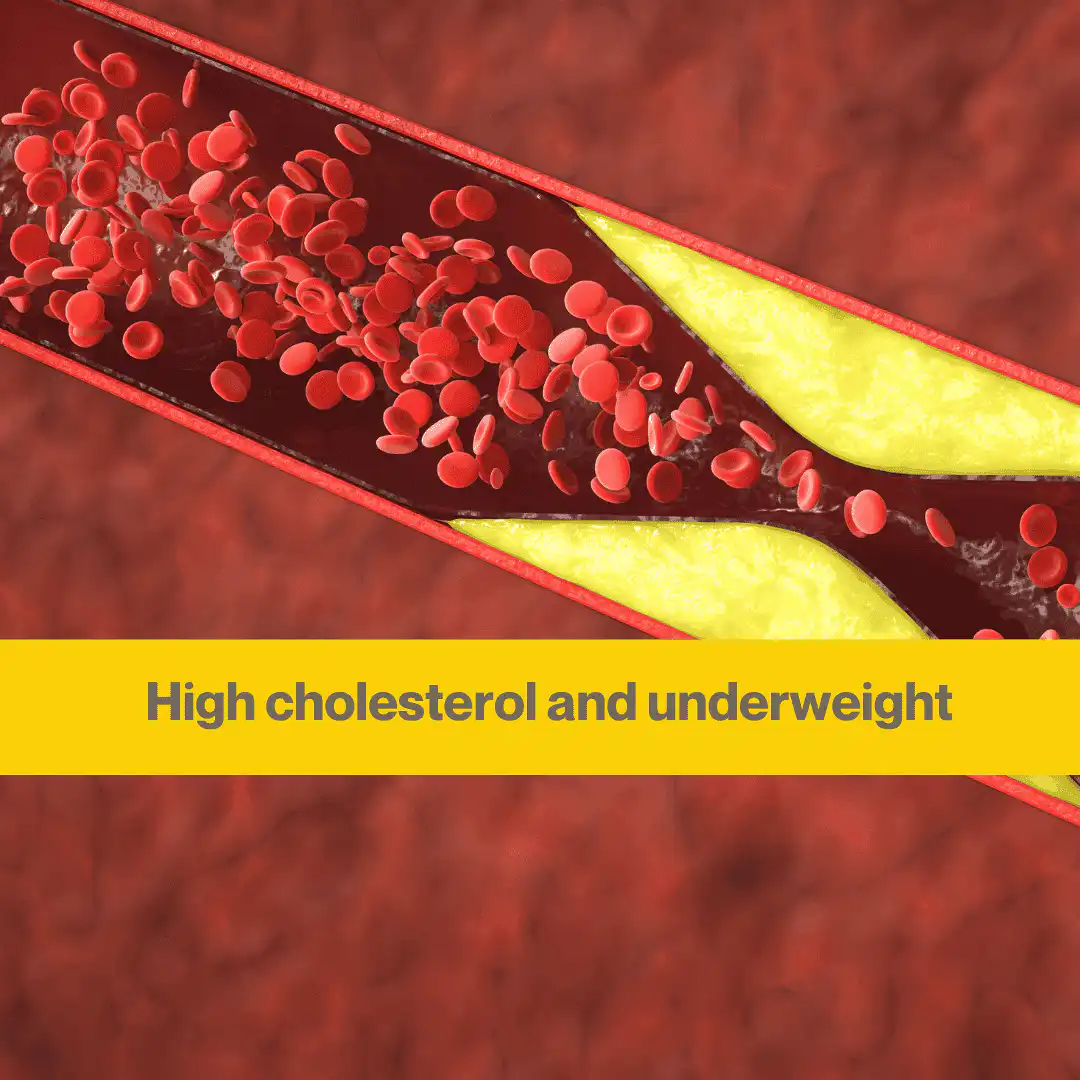
High cholesterol and underweight
Well, actually not eating enough food to the point of being malnourished can raise your cholesterol levels.
It sounds very unfair, but metabolic changes during undereating can cause high LDL levels. This post explains why you can get high cholesterol if you’re underweight, and what you can do to lower cholesterol alongside managing your IBS.
Why is high cholesterol bad?
Firstly, I just wanted to address the first bit of push back I sometimes hear from my clients which is along the lines of “We need cholesterol, the focus on reducing it comes from big-Pharma pushing statins.”
Quick cholesterol recap
Cholesterol is needed for many functions throughout the body, including creating hormones, the structure of your cells, processing vitamin D, and making bile. So, yes cholesterol is really important for health, and we don’t want to get rid of it all, but if we have too much of it circulating in the blood it can damage your blood vessels. There are two main groups of cholesterol we hear about:
- HDL – collects cholesterol and brings it back to the liver. Sometimes called ‘good’ cholesterol because it’s helping to remove it from around the body.
- LDL – sends cholesterol to all the cells in the body that need it. Sometimes referred to as ‘bad’ cholesterol because it sends more cholesterol to cells and tissues. It’s also associated with higher inflammation.
High cholesterol levels can block your arteries and may leave you at higher risk of heart attacks and strokes. We do need levels to stay within the recommended levels. This can be done through medication, or there are ways to lower it through diet and lifestyle changes.
I’ll explain how changing your diet can help.
High cholesterol and undereating
Many of my clients have high cholesterol markers despite eating a low fat diet. The reasons for high cholesterol aren’t the same in people who undereat. Typical risk factors for high cholesterol include being overweight, eating high calorie foods, inactivity, high alcohol intake or genetics.
You’ll know if you read a few of my blogs that I’m keen on regular meals for better digestion. Eating sufficient food volume helps your gut motility, feeds your good gut bacteria and supports better bowel movements.
High cholesterol in anorexia
We have some research on cholesterol levels in people who take undereating to the extreme, such as in the eating disorder anorexia nervosa. This shows that compared to healthy controls people with anorexia have high total cholesterol, HDL, LDL and triglycerides.
As someone with IBS or SIBO you may not be restricting your diet in such extremes but if you’ve lost a lot of weight you could still be affected.
Why does high cholesterol happen in undereating?
There are a few possible mechanisms by which your cholesterol might be higher if you’ve lost a lot of weight.
Body fat breakdown
The way body fat is broken down for energy in times of low energy intake may lead to higher circulating cholesterol. You don’t need to be anorexic to be losing weight rapidly, many of my IBS and SIBO clients have lost a lot of weight because they have eliminated so many foods from their diet. .
Your body may create more and release less
During prolonged low intake of energy the liver and other tissues increase production of cholesterol as part of adapting to starvation. This can raise blood cholesterol even though you’re not eating a high fat diet. You may not have been in full starvation mode, but some people with gut health issues have been undereating for many years.
Hormonal effects and metabolic stress
Low calorie states change thyroid hormones, sex hormones and stress hormone signalling, which can all influence cholesterol synthesis and clearance. For example if your thyroid is not operating well you may not properly break down LDL cholesterol, leading to higher circulating levels.
Sludgy bile flow
Bile is made from cholesterol to emulsify fats from your diet. When you don’t eat enough food, or avoid all fats then you might make less bile, or it can become thick and sludgy. Less bile production may also affect cholesterol clearance.
Slow moving sludgy bile can lead to gut motility slowing down, which adds to digestive issues like bloating, wind, constipation and bile acid reflux.

Can not eating enough cause high cholesterol?
Yes it can. You might be reading this, thinking ‘well I don’t have an eating disorder, this doesn’t apply to me’.
I’ve seen many IBS and SIBO clients where a low body weight and years of food restriction changed their body shape and how the gut functions. If you’ve lost more weight than is healthy for your size, and you’re struggling to put on weight, then it might be important to get your cholesterol levels checked.
I know this feels confusing, especially when most of the advice about lowering cholesterol is to eat less, especially saturated fats, and to lose weight.
So if you’re already underweight what should you do?
What you can do
The usual treatment in this situation is different to someone who’s overweight with high cholesterol. If you’re underweight then you do not need to reduce dietary fats but to work on steady, adequate nutrition alongside a regular follow-up with your doctor.
If you’re worried, start by speaking to your GP about repeating the test and getting a metabolic health check. Also, consider working with a nutrition professional who understands restrictive eating and digestive issues.
Book a Free 30-minute Enquiry Call
Book a free 30 min discovery call to discuss working with me on your digestion.
Eat sufficient energy – Your gut symptoms, weight and levels of cholesterol will affect how to tackle your high cholesterol. If your cholesterol is high because the body is not receiving enough total energy it could be increasing internal cholesterol production. Eating less fat won’t help.
Increase fibre – Ultimately a diet higher in soluble fibre is known to lower cholesterol, so that could be the first place to start. Increasing your fibre might sound scary (especially if you’ve got SIBO and read that fibre feeds the microbes), but there are ways to do it that won’t make your symptoms worse.
- Slowly increase low FODMAP fruits and vegetables to start building up your fibre tolerance. Try oats, carrots, broccoli, kiwi, and chia seeds.
- If you have constipation get the bowels moving, use laxatives and diet to help. You’ll be able to tolerate more foods if you can poo regularly.
Read – What to eat when you have SIBO
Exercise – Regular movement helps with reducing stress, improving sleep, and can improve your profile of blood fats. Exercise can increase the way your liver removes cholesterol, increase HDL and decrease triglycerides.
Consider blood tests for thyroid and female hormones (if relevant) – Other aspects of health that could be affecting high cholesterol include low functioning thyroid, and changes in your hormones. If you’ve got erratic periods that can be another sign of undereating.
Talk to your doctor – Find out what your doctor wants to do to lower the cholesterol. If you’ve been recommended statins but you’re not keen on taking them then you might be able to make changes through diet and lifestyle, but ultimately medication might be needed if you can’t do it through diet.
Get follow-up lipid tests – Give yourself 3-6 months to make diet and lifestyle changes and get retested.
FAQs about high cholesterol when you’re underweight
If I’m barely eating, why is my cholesterol high?
It’s a quirk of how the body adapts to low energy intake. When you aren’t eating enough, your liver produces more cholesterol and clears less of it from your bloodstream. It’s a protective response, not a sign that you’ve been eating “bad” foods.
Does this mean I’m at high risk of heart disease?
High cholesterol is linked to increased risk of heart disease, so even if you’re underweight it could still lead to issues. Your GP will look at the whole picture, including weight, blood pressure, family history and other blood markers to determine your risk.
It seems like undereating and starvation can create more of the ‘bad’ LDL type; more ‘atherogenic lipoprotein subclasses’. Although the metabolic context is not the same as someone who’s overweight with high cholesterol, some lipid changes, like more small dense LDL, still carry cardiovascular implications, so working with your GP is important.
Should I cut out fat to bring my cholesterol down?
No. In this situation, eating even less can make the problem persist. What usually helps is gradually increasing total intake and creating a more balanced pattern of eating. Your body then settles back into normal cholesterol handling. Some people may see an improvement in blood lipids, others may need medication to bring it down.
Focus on healthy fats like oily fish, avocado, nuts (Brazils, pecans, walnuts, macadamia), and seeds like pumpkin and sunflower.
Will my cholesterol improve if I eat more regularly?
Maybe. Once you’re consistently meeting your nutrition needs, the body’s ‘starvation mode’ switches off and cholesterol will hopefully move back towards a more normal range. This can take a little time, so your GP will usually repeat your test after a few months.
Could this be a sign of something else?
High cholesterol can occur alongside thyroid changes, high stress hormones or very limited diets. This is why it’s important to check in with your GP, who can rule out anything unrelated to intake.
Is it safe for me to increase what I’m eating if I’m worried about symptoms?
Yes, as long as it’s done steadily. If you have IBS or food-related anxiety, you can increase intake in a phased way using foods that feel manageable. Support from a nutrition professional can help you with building confidence.
How quickly should I expect a change?
Everyone is different. Some people see improvements within a couple of months. It could take longer, if you’ve been under-eating for a long time. A steady, sustainable return to adequate nutrition will help in the long run.

Hi, I’m Anna Mapson, registered nutritional therapist
I help people with IBS and SIBO get control of unpredictable gut symptoms to find long term relief from painful and embarrassing IBS without restrictive dieting.
I can help you to eat more, fear food less and build a healthy gut.
Find more about my 3 month Inside Knowledge: IBS nutrition support programme.

Comments