
What is sorbitol? And how much can eat?
Are you feeling overwhelmed by the complexities of managing your Irritable Bowel Syndrome (IBS) through the low FODMAP diet?
If so, you’re not alone. In this blog post, I’m going over sorbitol, a high FODMAP category that often catches people off guard. As an IBS nutritionist, I hope to make things clearer about what you can eat and how to manage your symptoms effectively.

Understanding sorbitol
Sorbitol, a sugar alcohol found naturally in certain foods, might not be on your radar as a potential trigger.
Yet, high sorbitol foods include common foods like apricots, cherries, peaches. And can even lurk as an additive (E 420) in processed foods like cakes and cough syrups. I know some of my clients in the Gut Reset can be surprised to hear these foods are high in FODMAPs.
Remember, it doesn’t mean that you will react to them, just that they are considered high FODMAP.
Avocado used to be classified by the Monash University as high in sorbitol, but they were reclassified in 2023. Now we know avocados are high in perseitol, another polyol.
How sorbitol impacts your digestion
Acting as a natural laxative in higher doses, sorbitol draws water into your gut. This can lead to increased stool volume, diarrhoea, bloating, and gas.
For those with IBS, heightened sensitivity to this process can intensify symptoms, causing discomfort and pain.
Your sorbitol reintroduction strategy
Once you’ve established a baseline on the low FODMAP diet, the key is a strategic reintroduction process.
All the FODMAPs should be tackled separately.
FODMAP reintroduction plan
In order to bring back in any of the FODMAPs your basic process is
- Select the food from the FODMAP group
- Trial a small amount on Day 1, increase slightly on Day 2, then increase further on Day 3
For more information on reintroducing FODMAPs listen to my podcast – Episode 18.
If a high sorbitol food triggers a reaction, you’ll need to
- firstly, allow time for recovery so you get back to that baseline again with a happier digestion.
- then retest with a different sorbitol food from the list.
- OR move onto the next FODMAP group and revisit sorbitol later in the challenge process.
This targeted approach helps pinpoint specific triggers within the sorbitol category. A reaction to one sorbitol food won’t necessarily mean all of them are out. This is because other compounds in foods can also affect your digestion.
Understanding portion sizes
If you suspect sorbitol is an issue, then you’ll need to be aware of portion sizing for different foods.
Let’s break down specific sorbitol levels in common foods.
This data is taken from the Monash University FODMAP app as of April 2025. Foods turn to moderate FODMAP portions at these levels:
- Apricot – 1-1.5 fruits
- Cherries – 6g (2 cherries)
- Yellow peaches – 30g
- Aubergine – 178g
- Also the additive E-420 (in sweets, packaged cakes, cough syrups, chocolates).
Beware of FODMAP stacking
Don’t fall into the FODMAP stacking trap. Consuming multiple low to moderate sorbitol portions in a single meal can lead to bloating or gas. Little portions of sorbitol can add to up a higher FODMAP meal.
Read more about troubleshooting the low FODMAP diet
Stay aware of FODMAP stacking to ensure you remain within safe limits for each meal. And if you do get a reaction, just take a little break, reset and try again.
Reacted to sorbitol?
Remember, reacting to sorbitol doesn’t mean omitting these foods forever.
I suggest all my Gut Reset client start incorporating small portions of low FODMAP foods, you can reintroduce variety into your diet. With sorbitol this could look like a few cherries, or half a peach now and again.
If you got a reaction during the reintroduction
Experiment with sorbitol challenges over time. Perhaps you will be ok eating these foods on alternate days.
Or try again after a few months as your tolerance may change over time.
In summary
It’s a challenge to get your IBS diet right. With the right guidance, you can regain control over your IBS, and get back to living without panic about using the toilet.
If you want help figuring out your IBS triggers, start your Gut Reset with me over 3 months to find a diet that works for you. Just set up a free call to discuss what you need some help with. Email info@goodnessme-nutrition.com

IBS Nutritionist
Hi, I'm Anna Mapson, registered Nutritional Therapist.
I help people with IBS and SIBO get control of unpredictable gut symptoms to find long term relief from painful and embarrassing IBS without restrictive dieting.
I can help you to:
- understand your digestion better, so you recognise your triggers
- eat a well balanced diet, with tasty meals that are simple to prepare
- reintroduce your trigger foods so you can get back to enjoying food again
Find more about my 3 month 1:1 Gut Reset programme.
How does dairy fit into a low-FODMAP diet?
When following a Low-FODMAP Diet, it's important to understand how dairy fits into the plan. In fact, you might be surprised to know you don't have to give all dairy up. Dairy products can be a significant source of lactose. This is a type of naturally occurring...
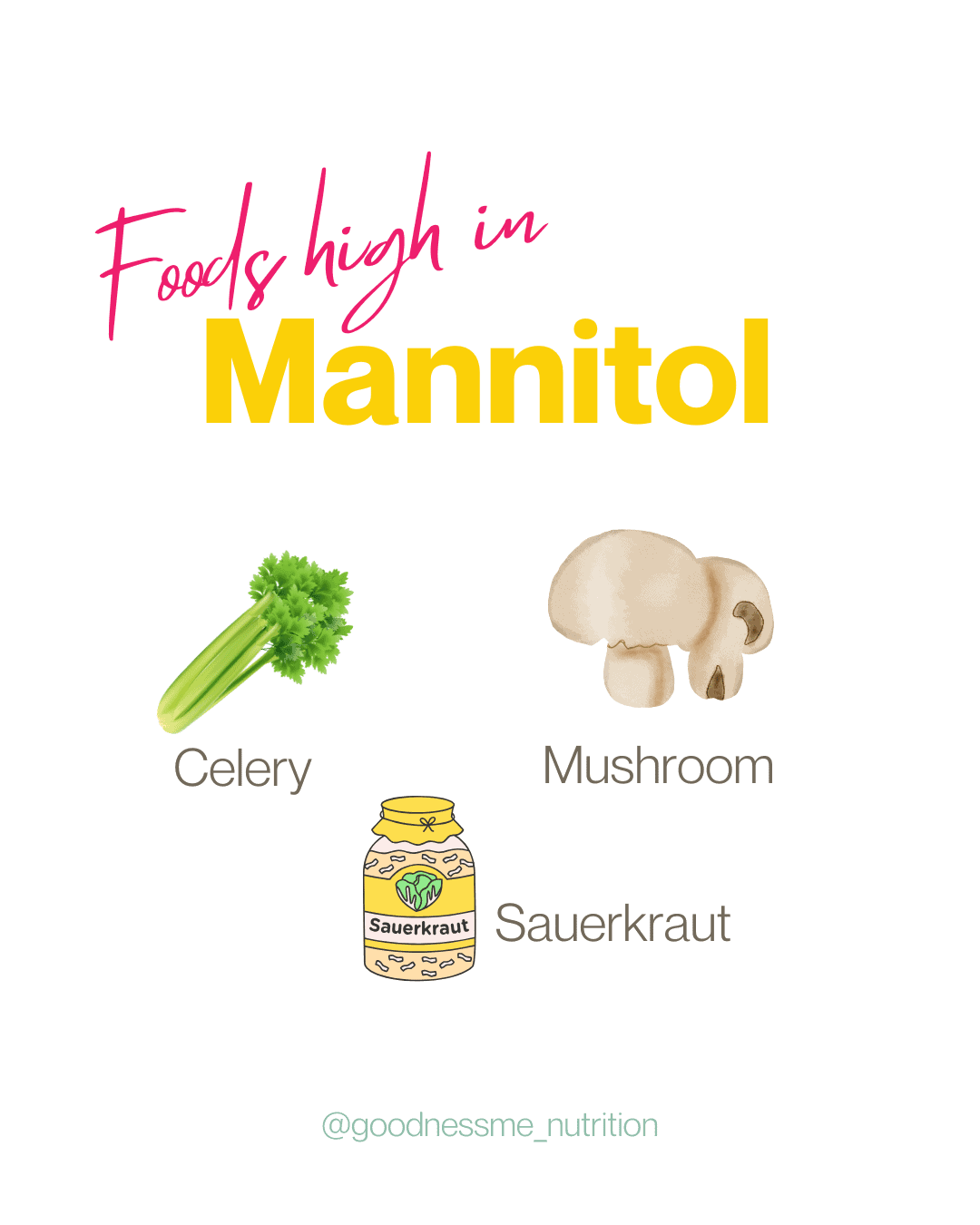
Mannitol reactions – can’t eat mushrooms or celery?
What is mannitol? And how does it affect people with IBS? Are you feeling overwhelmed by the complexities of managing your Irritable Bowel Syndrome (IBS) through the low FODMAP diet? If so, you're not alone. In this blog post, I'll explain more about the low FODMAP...
Can you eat cheese if you have IBS?
Cheese may set off your IBS symptoms, but why? There are many reasons why cheese can trigger digestive issues. Is it the natural sugar lactose, or is it the high fat content, or the high histamine triggering your bloating, gas production or diarrhoea. Cheese is so...


Could I use broccoli to challenge sorbitol? If so how much would the portions be?
Hi Ed, I’m not aware that broccoli has any sorbitol in it so I don’t think this would work.