
Have you ever considered mushrooms a trigger for your IBS? This blog post covers all you need to know to decide if you should keep eating them.
The benefits of eating mushrooms with IBS
Mushrooms are fungi and are very nutritious. Different species have different benefits, but most contain B vitamins, selenium, copper and antioxidants.
Mushrooms contain a type of fibre called beta-glucan, also found in oats. Beta-glucan is very good for heart health, because it has been shown to lower cholesterol. It can also be fermented by gut bacteria, encouraging healthy populations of microbes.
Eating mushrooms is also potentially linked to mood benefits. An observational study of 24k people showed those who ate (4g) mushrooms daily had a lower chance of depression over 9 years than people who didn’t eat mushrooms. Interestingly eating more (19g per day) mushrooms didn’t lower the risk.
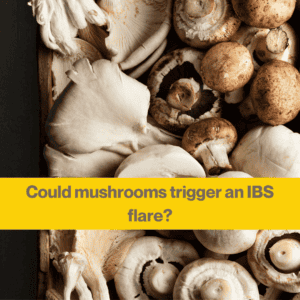
How do mushrooms affect your digestion?
Mushrooms are high in mannitol, a sugar alcohol. This is one of the FODMAP categories, which also includes sauerkraut and celery. Button mushrooms are also moderate for fructan, another low FODMAP category, when you eat more than two mushrooms.
- Button mushrooms are low FODMAP until 10g (or 1.5 mushrooms)
- Shitake & portobello mushrooms are low FODMAP until 15g
- Oyster mushrooms are low FODMAP at a normal serving of around 80g.
Mushrooms and the low FODMAP diet
Mannitol, as a polyol, can draw water into the gut or be fermented by gut bacteria to produce gas.
Are mushrooms ok to eat if you have IBS?
Whether or not mushrooms will trigger a flare in you is very individual. Not everyone with IBS reacts to all types of FODMAP foods.
How to start eating mushrooms with IBS
If you haven’t eaten mushrooms for a while, try bringing them back in slowly. Perhaps start with just 1-2 once a day with a meal and build up from there.
Did you know?
You can increase the vitamin D levels in mushrooms by leaving them in the sun for 20 mins before eating them because they soak up the radiation.
I wouldn’t rely on mushrooms for your vitamin D as this isn’t a huge amount.

You may not have an issue with any FODMAPs, so if you have IBS, it’s best to test your tolerance using the low FODMAP diet intervention.
If you want help figuring out your IBS triggers, start your Gut Reset with me over 3 months to find a diet that works for you. Just set up a free call to discuss what you need some help with. Email info@goodnessme-nutrition.com

IBS Nutritionist
Hi, I'm Anna Mapson, registered Nutritional Therapist.
I help people with IBS and SIBO get control of unpredictable gut symptoms to find long term relief from painful and embarrassing IBS without restrictive dieting.
I can help you to:
- understand your digestion better, so you recognise your triggers
- eat a well balanced diet, with tasty meals that are simple to prepare
- reintroduce your trigger foods so you can get back to enjoying food again
Find more about my 3 month 1:1 Gut Reset programme.
Low FODMAP Vegetables for IBS relief
Confused about which vegetables are low FODMAP? Dealing with IBS can throw some serious curveballs into your meal planning, right? But don't worry, you can still include lots of veg in your meals. I'm here to dish out some tasty tips on navigating the low FODMAP diet...
Ice cream on the low FODMAP diet: A comprehensive guide
If you're managing Irritable Bowel Syndrome (IBS), navigating dietary choices can be a daunting task. For many individuals, the mere thought of indulging in a scoop of ice cream can evoke a mixture of desire and apprehension. Can you eat ice cream on the low FODMAP...
How does dairy fit into a low-FODMAP diet?
When following a Low-FODMAP Diet, it's important to understand how dairy fits into the plan. In fact, you might be surprised to know you don't have to give all dairy up. Dairy products can be a significant source of lactose. This is a type of naturally occurring...


I have suffered for years and excited to learn how to live a better quality of life!