
If you’re wondering whether the low FODMAP diet will help you lose weight, let me be clear from the start: this isn’t a weight loss diet.
The goal of the low FODMAP diet is not to cut calories, but to temporarily remove fermentable carbohydrates that may be triggering your IBS symptoms.
If you need help with the low FODMAP diet (including recipes and clear process steps) check out my Ultimate Low FODMAP Diet Guide.
When the low FODMAP diet feels like a weight loss plan
One of my previous clients assumed they would lose weight during the low FODMAP phase because it felt so restrictive—similar to past experiences with calorie-controlled diets.
This client found the food rules emotionally challenging. For them, being on “a diet” of any kind meant dealing with food guilt, constant planning, and even disappointment when she hadn’t lost weight, despite all her efforts.
That’s why it’s so important to understand the true purpose of the low FODMAP diet and set realistic expectations. This client felt very cheated when after all this work they didn’t actually lose any weight, even though she was doing everything right.

Why weight loss is not recommended on the low FODMAP diet
If you are looking to lose weight, my advice is do one thing at a time. From working with hundreds of clients I recommend addressing your digestive issues and then focus on weight loss.
Trying to do both at once can backfire. Here’s why:
- It’s too complicated – Following the low FODMAP diet is difficult, I’m not going to lie! It requires a lot of thought at first to check you’re not inadvertently eating higher FODMAP foods, and it’s not a very intuitive diet. Adding on further controls in terms of energy intake will be adding to your workload and could reduce your chances of sticking with the plan.
- You need to keep up your energy levels – If you drop your calorie intake and this leaves you lacking in energy, or affecting your sleep then this could mess up your FODMAP challenges.
Why some people lose weight on the low FODMAP diet
So, will the low FODMAP diet help me lose weight? Well, yes, some people find they do lose weight when on the low FODMAP diet, but not necessarily because they’re trying to. Common reasons include:
- Smaller portions of carbohydrate-rich foods – As part of controlling the portions of high FODMAP foods many of my clients find they eat fewer carbohydrates (e.g. pasta and bread) and focus more on protein.
- More awareness of portion sizes – Once you start checking the recommended serving sizes of some foods you might realise you were eating more than the recommended portion sizes for certain foods.
- Cutting back on snacks – If you’re avoiding high FODMAP snacks like biscuits or crisps in the office, your overall energy intake might drop without you realising. If you feel like you’re missing out on too many social occasions bring some food with you so you can at least eat something with the others.
While these changes can support weight loss, they’re a side effect—not the goal of removing high FODMAP foods.
But what about if you don’t want to get any smaller?
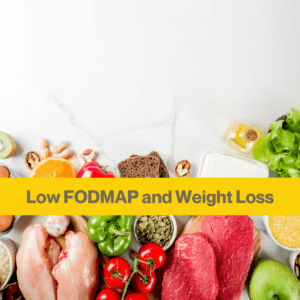
How to avoid unintentional weight loss on the low FODMAP diet
Some of my clients are underweight or already in a smaller body and are worried about losing more weight during the low FODMAP process. After all, you’re removing some foods so naturally there could be a change in your energy intake.
This can happen due to:
-
Over-restriction out of fear of triggering symptoms
-
Eating too little during the FODMAP elimination and reintroduction phases
-
Ongoing gut symptoms like nausea, bloating or pain affecting appetite
Here are some tips on avoiding weight loss during the low FODMAP restriction and challenge phase.
- Increase the size of your protein portions at every meal. Animal sources of protein contain no FODMAPs so you can freely eat eggs, meat, fish and seafood. Vegetarians can include tofu, nuts, and low lactose dairy.
- Try eating 4-5 smaller meals instead of 3 large meals. Make the additional meals a proper meal, not just biscuits, crisps, but actually adding protein and healthy fats. This allows you to space out the FODMAP rich food, but increase your calories throughout the day.
- Concentrate on low FODMAP wholegrains such as rice, quinoa, oats and potatoes.
- Don’t skip healthy fats – A small amount of fat at each meal can add energy and help with nutrient absorption. Try nut butters, butter, small portions of nuts or seeds. Small amounts of avocado can also be tolerated by most people.
I’ve written a longer blog post about how to gain weight with IBS
It’s tricky to change your diet if you have IBS, so please don’t go it alone. If you want to help just ask to arrange a discovery call, and we can talk about working together in the 3 month Gut Reset.
Listen to my podcast episode 50 about gaining weight.

IBS Nutritionist
Hi, I'm Anna Mapson, registered Nutritional Therapist.
I help people with IBS and SIBO get control of unpredictable gut symptoms to find long term relief from painful and embarrassing IBS without restrictive dieting.
I can help you to:
- understand your digestion better, so you recognise your triggers
- eat a well balanced diet, with tasty meals that are simple to prepare
- reintroduce your trigger foods so you can get back to enjoying food again
Find more about my 3 month 1:1 Gut Reset programme.
Can you eat cheese if you have IBS?
Cheese may set off your IBS symptoms, but why? There are many reasons why cheese can trigger digestive issues. Is it the natural sugar lactose, or is it the high fat content, or the high histamine triggering your bloating, gas production or diarrhoea. Cheese is so...

Why laxatives should never be used for weight loss
Gut health trends on Tiktok such as #guttok have been responsible for spreading myths such as laxatives help with weight loss. This is completely inaccurate, and may even harm your health. As an IBS nutritionist I sometimes recommend people use laxatives for...

How to eat apples with IBS
An apple a day is supposed to be healthy, but what about if you have Irritable Bowel Syndrome? This post explains how to eat apples with IBS and why they might be an issue for you. Apples and IBS They are cheap, and an easy snack to carry around with you, apples are...


I’m underweight with a 17 BMI. I find almost all low FODMAP foods unappetizing and too bland to be palatable. I’ve tried omitting the high FODMAP, but then I can’t eat what is left. Potatoes are great with sour cream or ketchup, but they’re cring worthy without it. Peanut butter is good, but can I live with just eating peanut butter?
Hi Jenifer, are you using flavours like soy sauce, ginger, chilli, cinnamon, citrus, parsley, coriander? These are all low FODMAP and can help add flavour to foods. It sounds like you might benefit from some more personalised advice, so you can find out what will work for you. You can book a free call with me about working with me if you want via this link www.calendly.com/annamapson/30min
You can also read this blog post about putting on weight with IBS https://www.goodnessme-nutrition.com/ibs/how-to-gain-weight-with-ibs/