
Have you tried drinking herb teas for IBS? Soothing drinks which benefit your digestion can help you during an IBS flare up, or to keep bloating at bay. I often recommend them to my clients.
The benefits of herb tea
Admittedly some people say they taste like drinking grass water, but I actually love them!
They are also a great way of adding hydration to your day, because herb tea counts towards your goal of around two litres of water a day.
Staying hydrated is important for people with IBS because:
-
If you have diarrhoea predominant IBS (IBS-D) then you need to keep up your water intake
-
If you’re more prone to constipation then you need to keep up your liquid intake to stop stools getting too hard.
Do you want to know whether coffee is good for IBS? Read more about how coffee can affect your digestion.
So what’s the deal with herb teas for IBS?
Best drink for IBS
Herbs have long been used as traditional methods for soothing and supporting our health.
You can make herb teas from the fresh herbs or from pre-prepared tea bags, either is completely fine. The reasons herb tea is helpful for IBS includes:
-
Warm tea can help you stomach relax and comfort you during a flare up.
-
The herbs work to relax the smooth muscle of your intestines, reducing cramps, or help with reduction in nausea.
-
Teas can be cooled and kept in the fridge if you prefer colder drinks.
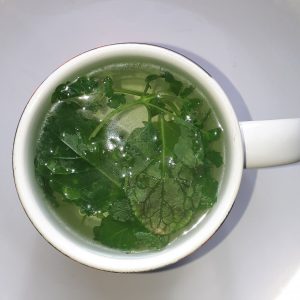
Peppermint tea reduces gas
Peppermint oil is an antispasmodic so can support relaxing painful stomach cramps, and is most effective in capsules. Despite not having the same level of active peppermint oils, my clients often find the tea can be very helpful.
Its been traditionally used as a digestion aid in cultures around the world at the end of meals.
When to take care with peppermint and gut health
Peppermint tea will relax the sphincter at the top of the stomach, increasing your burping. The reason this is good for IBS is that the gas doesn’t travel down your digestive system adding to that need to undo your waist band by 4pm!
However, if you’re prone to heartburn this is one reason why it’s best not to drink mint tea before bed. Anything that will relax the lower oesophageal sphincter can lead to reflux.
Does ginger help IBS?
Ginger is great for anyone who feels sick a lot. Traditionally ginger has been used to help to reduce feelings of nausea (antiemetic) and reduce inflammation.
A study on rats showed it may reduce water being drawn to the bowel. Ginger may also reduce inflammation, which is helpful for IBS-D.
Ginger is also a prokinetic which means it may help to keep bowels moving in the case of constipation, AND it may help to stop spasms of diarrhoea.
So it’s useful for IBS-D and IBS-C.
Actually, I’ve written a whole blog about ginger for IBS if you want to read more. Start with a small amount of fresh ginger grated into warm water and see how you get on.

Fennel may relax IBS cramps
As well as adding flavour to curries and sauces, fennel has traditionally been used to relax digestive gas, cramps and bloating.
You can soak the fennel seeds in hot water, or chew on them after meals. If you’re wondering what it tastes like, it has a liquorice like taste.
Fennel is a high FODMAP herb though. This means it may not be suitable for some of you following the low FODMAP diet. If you’re trying fennel for the first time start with a small amount and work up from there.
You could also just add it to your curries and sauces for flavour.
Grow your own IBS tea
Lemonbalm grows very easily in the garden, and spreads like wildfire, so its easy to grow your own.
Its a calming herb that may also benefit anxiety, sleeplessness and worry, and relax your gut.
It’s thought to reduce hypersensitivity in the digestive system, to support IBS symptoms.
Other useful teas include:
- chamomile
- liquorice
- turmeric
- lemon
As an IBS nutritionist herb teas are often part of my recommended IBS flare up kit. Let me know if you need help with your digestion – just book a call via my Contact page to tell me what you’re looking for help with.

IBS Nutritionist
Hi, I'm Anna Mapson, registered Nutritional Therapist.
I help people with IBS and SIBO get control of unpredictable gut symptoms to find long term relief from painful and embarrassing IBS without restrictive dieting.
I can help you to:
- understand your digestion better, so you recognise your triggers
- eat a well balanced diet, with tasty meals that are simple to prepare
- reintroduce your trigger foods so you can get back to enjoying food again
Find more about my 3 month 1:1 Gut Reset programme.
Vitamin D – does it help IBS and SIBO?
Could a supplement of vitamin D help improve your quality of life if you have IBS? Vitamin D is sometimes called the sunshine vitamin (it's not actually even a vitamin but a hormone, but let's just call it vitamin D for now!) The first thing to note, is that people...

Is ginger good for IBS and SIBO?
Have you ever tried ginger for IBS or SIBO? Ginger is a root herb used as a food flavouring and also has traditionally been used as a medicine. It’s a well-known anti-inflammatory and can be a good way of supporting your digestive system. Ginger for slow transit time...

Your IBS diet change – how to compromise
We all want to get what we want, right? And sometimes we have to make some changes and compromises to get there… The question is, how much compromise are you willing to make in your IBS diet in order to get relief from your digestive symptoms? I’m Anna Mapson, a...


I just looked chamomile tea up on the Monash app and it is definitely not ok.
You’re absolutely right, but not everyone with IBS needs to avoid FODMAPS so this tea might help some people. 🙂
Hello Mapson
I am really interested with your help to manage my IBS trouble, which really disturbing my living mode
Hello I’ve sent you an email or you can set up a free call with me to discuss what is needed – this can be booked here: https://calendly.com/annamapson/30min