
Should I lose weight or aim for body recomposition? If you’re on a mission to lose weight then you might find this post helpful to reframe your goals.
Sometimes when I’m working with clients who want to lose weight they start exercising a lot, but still don’t seem to lose pounds on the scales.
Reasons we don’t lose weight
If you’re eating well, and exercising, why aren’t you losing any weight?
The scales can stay the same for a number of reasons. For example
- eating more calories than you burn off,
- stress and emotional issues
- underestimating food and overestimating exercise.
But also sometimes you are not losing weight because you are gaining muscle due to a successful exercise programme. (see below for why muscle is important)
This is a good thing. Body recomposition is more important than the overall weight number on the scales.
Related Post – How to Lose Weight with IBS
What is body recomposition?
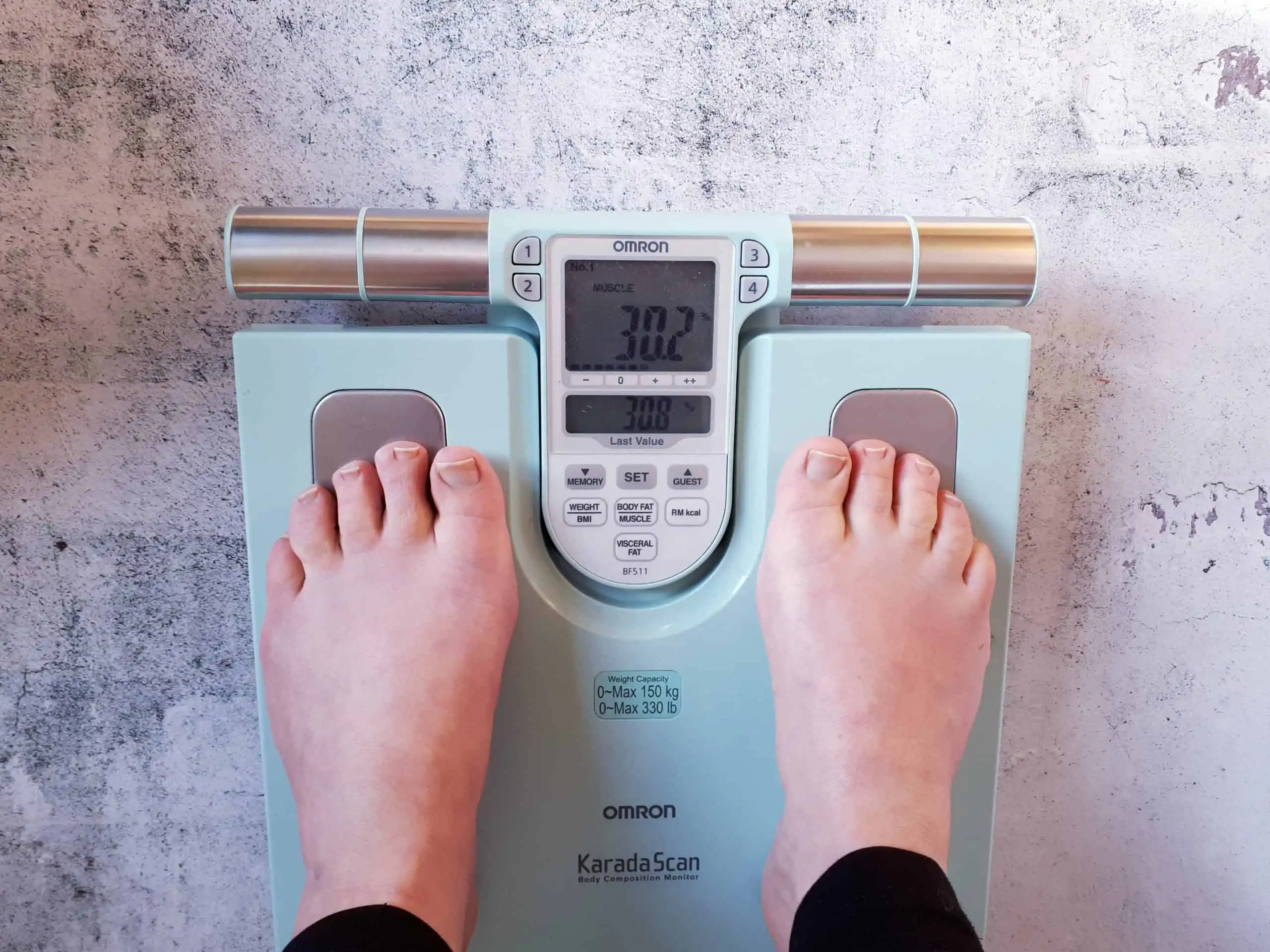
Changing the dynamics between fat and muscle will often lead to little change on the scales, but you might notice a difference in your measurements around your waist or hips.
A kilo of body fat and a kilo of muscle add the same weight to the scales, but they make your body look and feel very different.
And there are different health profiles associated with each kilo of weight. This is just one of the reasons why the scales aren’t always the best measure of health.
Related post – Can’t Lose Weight On A Vegan Diet?
Book a Free 30-minute Enquiry Call
Book a free 30 min discovery call to discuss working with me on your digestion.
Why crash diets are bad
Aside from feeling hungry, depriving yourself and getting low energy and mood (do I need to go on?) crash diets don’t really work for weight loss.
People tend to put the weight back on again, and the yoyo starts again.
If you’re solely focused on losing weight, you could end up losing muscle by going into a large calorie deficit. This would end up with a worse fat : muscle ratio, because you’ve lost muscle.
So even after your workout, you’re still burning more calories if you have more muscle.
This means if you’re going ‘on a diet’:
- Weight loss isn’t necessarily good
- Weight gain isn’t necessarily bad
Where you carry the fat is important
We can have fat under our skin (sub-cutaneous), or around the organs internally (visceral). To some extent you can see how much fat there is under the skin, you can often pinch your tummy between your fingers.
But visceral fat is located deeper in our torso, and can’t be felt. It’s possible you can be ‘slim’ but have higher amounts of internal fat.
7 steps to body recomposition
The best approach to body recomposition is to eat healthily and exercise. To help you avoid losing muscle, and fluids ensure:
- Your exercise programme includes both strength training and aerobic fitness
- You are eating enough protein to help sustain your energy and avoid muscle loss
- Your diet is full of vegetables and fruits hitting your 5 a day.
- Cut out or reduce heavily processed foods
- Eat sufficient fibre (pulses, beans, wholegrains, fruit and veg)
- Drink your 8 glasses of water a day
- Sleep well and find ways to build in down time to your schedule
If you want to get to know your body composition and easy to implement strategies for how to change it contact me for a 1:1 consultation.

Hi, I’m Anna Mapson, registered nutritional therapist
I help people with IBS and SIBO get control of unpredictable gut symptoms to find long term relief from painful and embarrassing IBS without restrictive dieting.
I can help you to eat more, fear food less and build a healthy gut.
Find more about my 3 month Inside Knowledge: IBS nutrition support programme.

Comments